COLONNES ROSEAUX
Princess Charlene’s Promenade, Monte-Carlo, Monaco - 2026
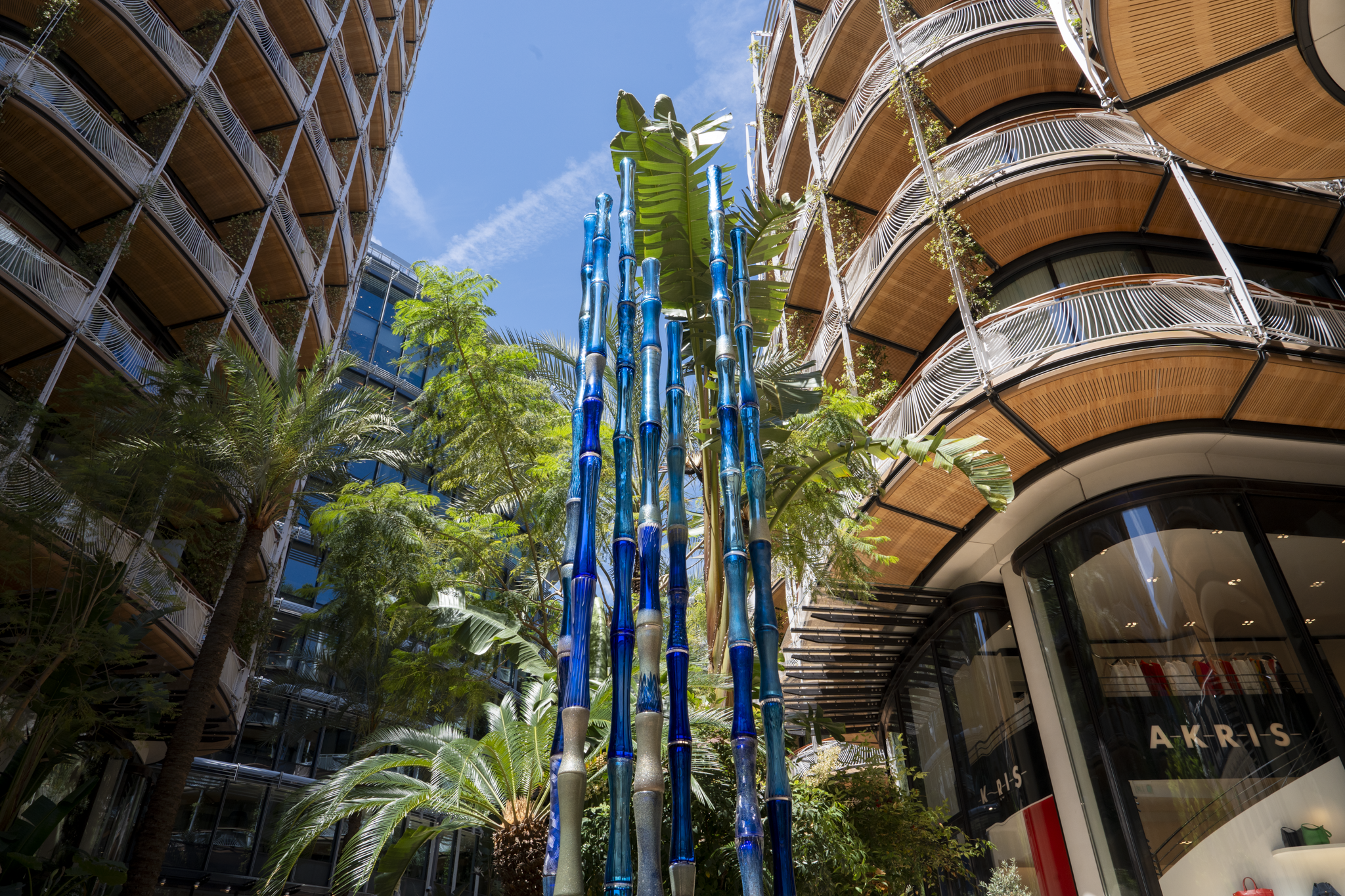
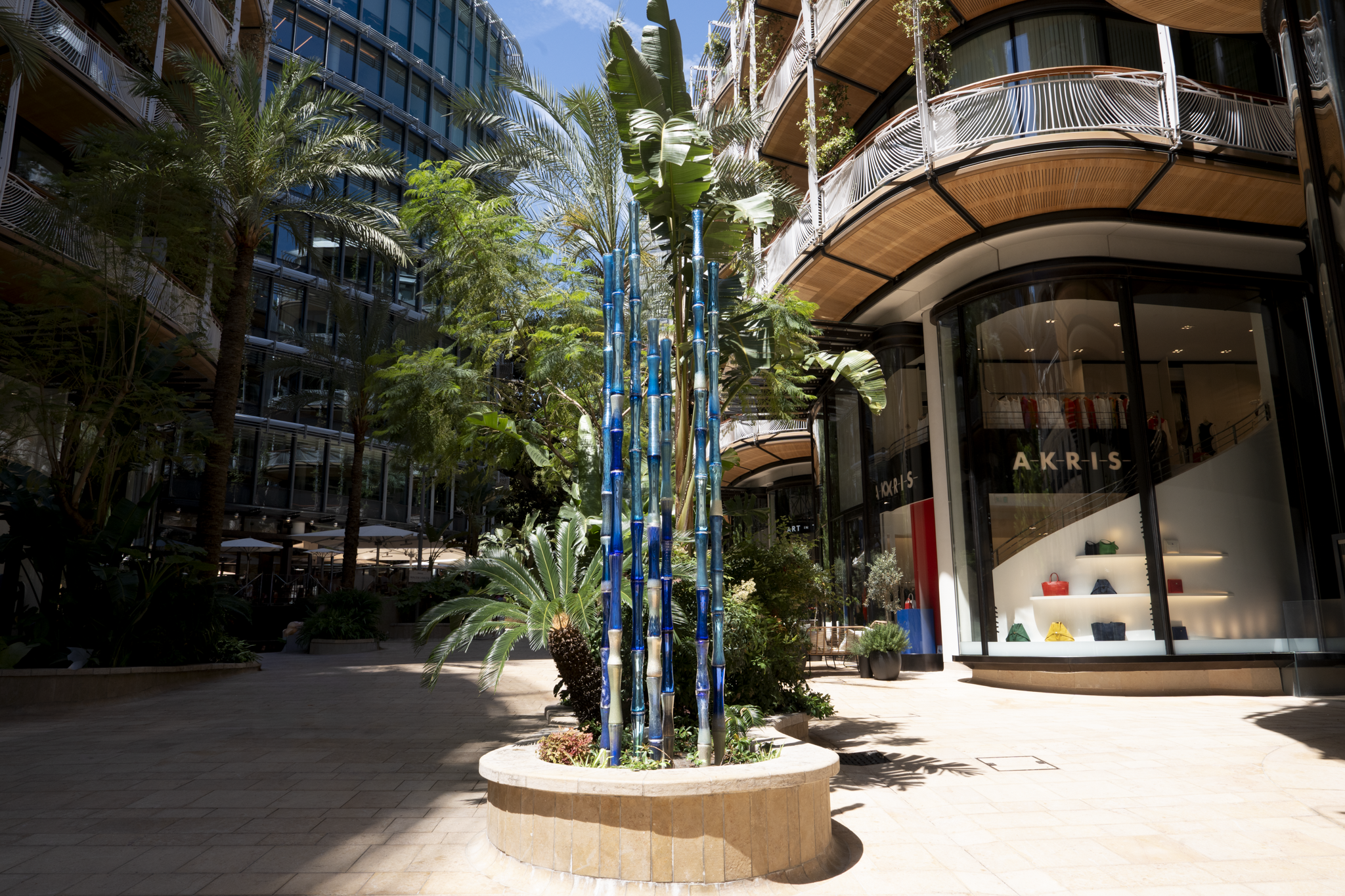
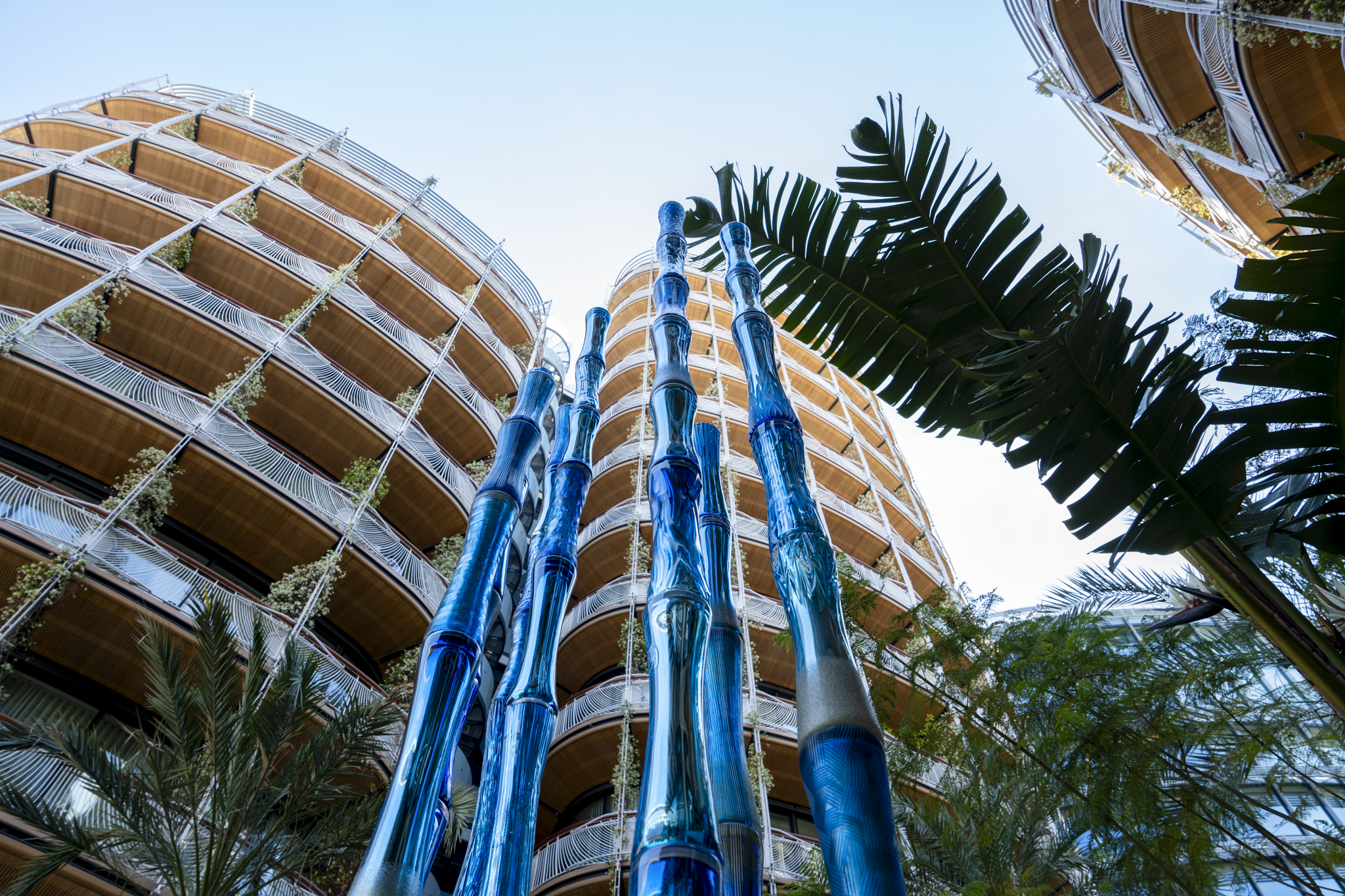
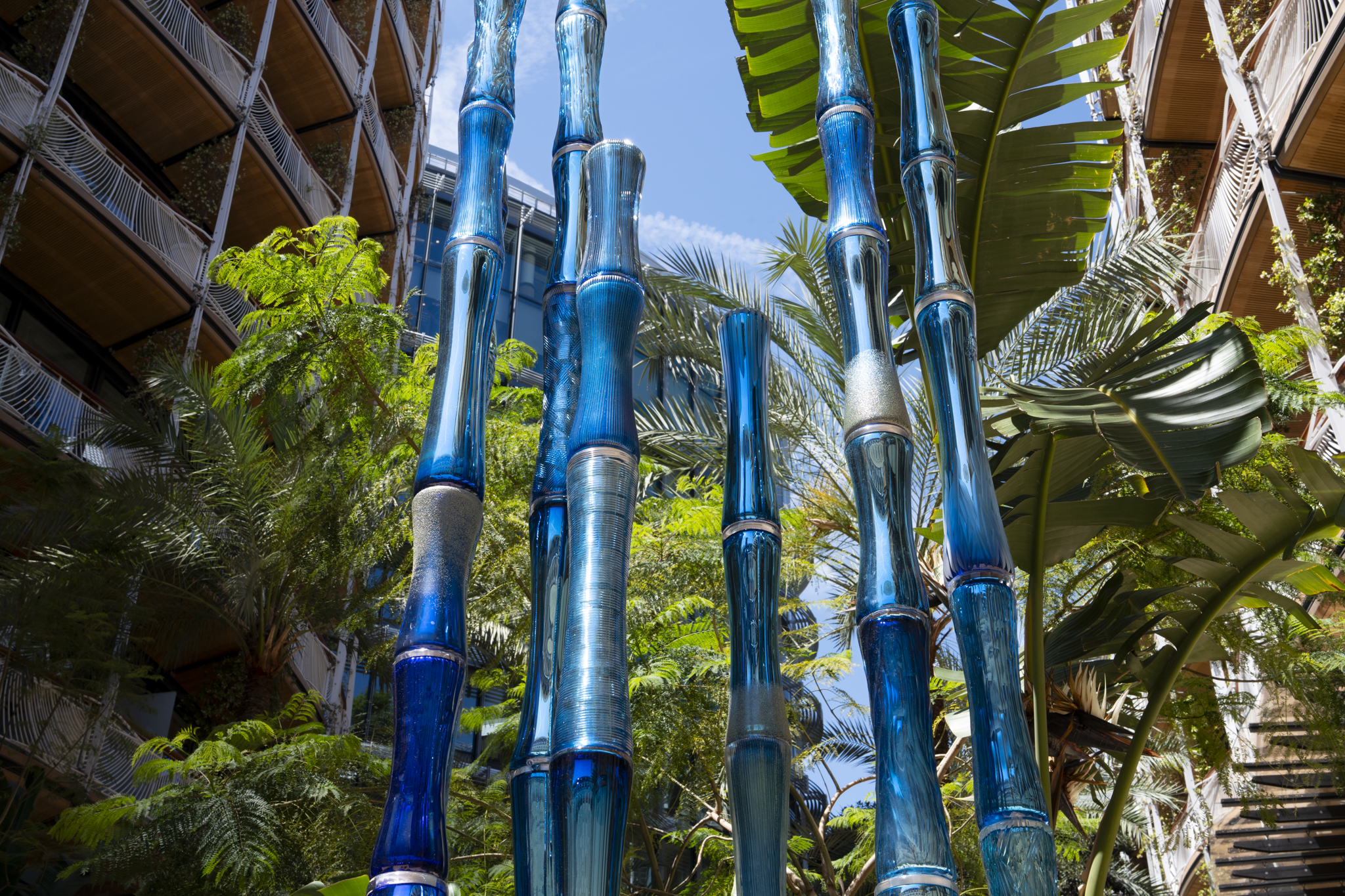
Seven glass columns rise four and a half meters along the Princess Charlene Promenade.
From a distance, they evoke a grove of tall reeds caught in the light. Up close, they stand at the meeting point of two distinct realms: the column, associated with architecture, order, and constructed verticality, and the reed, associated with life, growth, and flexibility.
With Reed Columns, Antoine Pierini does not seek to represent nature. Instead, he reveals the forces that shape it. His work explores the invisible tensions that give rise to the visible structures of the world: the force that lifts a stem, the balance that keeps a form upright, and the silent organization that makes its ascent possible. At the core of each column, an almost imperceptible stainless steel framework connects the individual glass elements. This hidden structure supports the visible form and embodies the very subject of the work.
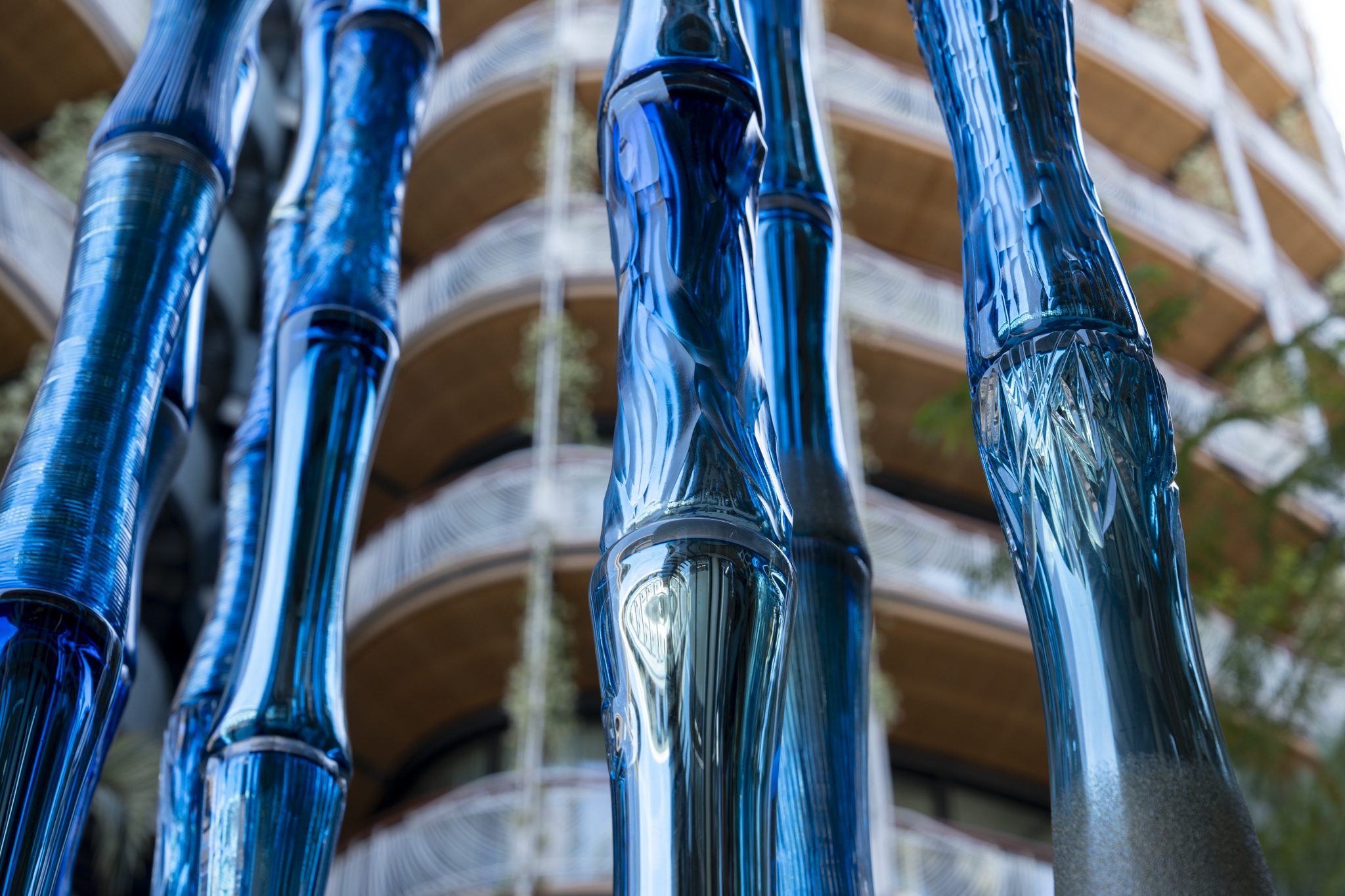
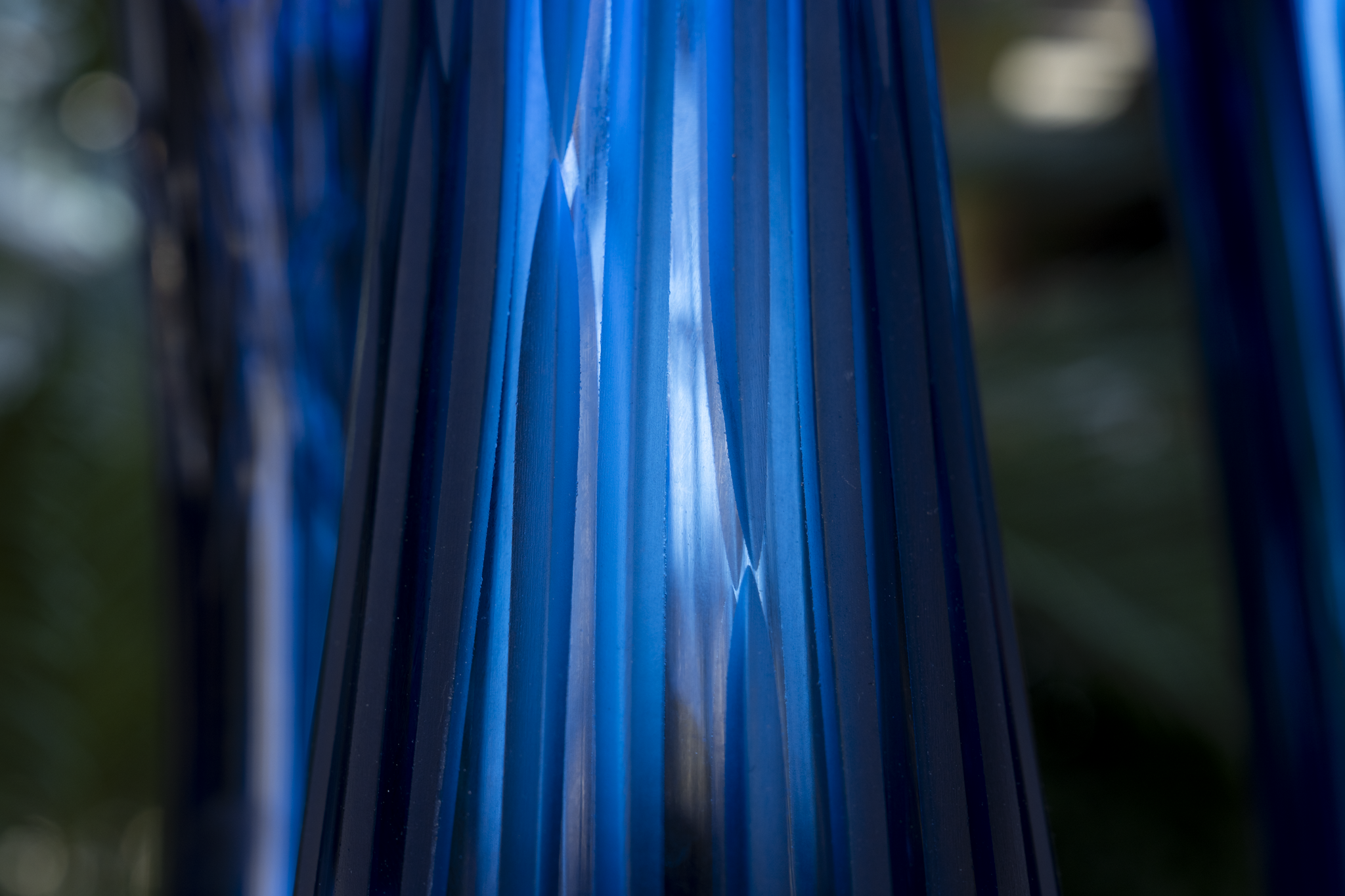
Each column is composed of hand-blown and hot-sculpted glass elements, then engraved, polished, and silvered to achieve a mirror-like finish. The choice of a silver-blue gradient is deeply connected to Monaco’s unique setting. Built on a steep hillside overlooking the Mediterranean, Monaco exists within a landscape where the city, the sea, and the sky remain in constant dialogue. Along the horizon, countless shades of blue overlap and merge, continually shifting with the changing light of day and night.
The installation was conceived to resonate with its surroundings. Its reflective surfaces capture the changing sky, the reflections of the sea, the surrounding architecture, and the nearby vegetation. At times deep, at times luminous, and at times almost immaterial, the columns never reveal exactly the same image.
Through the use of glass, a material that is both dense and luminous, fragile yet enduring, Antoine Pierini places this monumental installation within a broader reflection on time. Exposed to the changing seasons and to the gaze of visitors, the sculpture does not seek to overcome time. Instead, it inhabits it.